
Building a home for a move of God is rarely as simple as “if you build it, they will come.” For most church leaders and Christian school boards, the reality is a lot more… paralyzing.
You’re standing on a piece of dirt—or perhaps in a cramped, outdated lobby—feeling the weight of a thousand questions. How do we move forward when construction costs are skyrocketing? What do we do with a site that’s shaped like a toothpick? How do we navigate a jurisdiction that seems more interested in red tape than community impact?
It’s easy to let decision paralysis set in. You want to reach your community, but the gap between your current reality and your God given vision feels like a chasm paved with expensive invoices and unclear blueprints.
At Risepointe, we don’t just draw buildings; we help you align your environment with your mission to help grow your organization and impact the Kingdom of God. Here are three real-world stories of ministries that faced those same “paralyzing” problems and chose to lean into a creative, vision-driven future.
—
1. The Strategy of Sacrifice: Awaken LV (Las Vegas, NV)
In the city that never sleeps, Awaken LV (formerly Calvary Chapel Las Vegas) had a massive heart for its community but a very specific set of physical “lids.”
The Problem: A Narrow Path to Growth
They were operating on an incredibly challenging, long, and narrow site measuring only . To make matters more challenging, they had a “families-first” DNA that led them to build a K-12 school before they ever built a permanent sanctuary. This meant the church was worshipping in a gym for years, sacrificing their “ideal” worship space to prioritize the next generation. Eventually, they hit a wall: overflow crowds were capped at roughly 600 people, and they couldn’t grow any further without a new plan.
The Creative Pivot
Instead of building a “monument” to worship, Risepointe helped them design a dual-purpose auditorium that serves both the church and the school.
Key Design Lessons from Vegas:
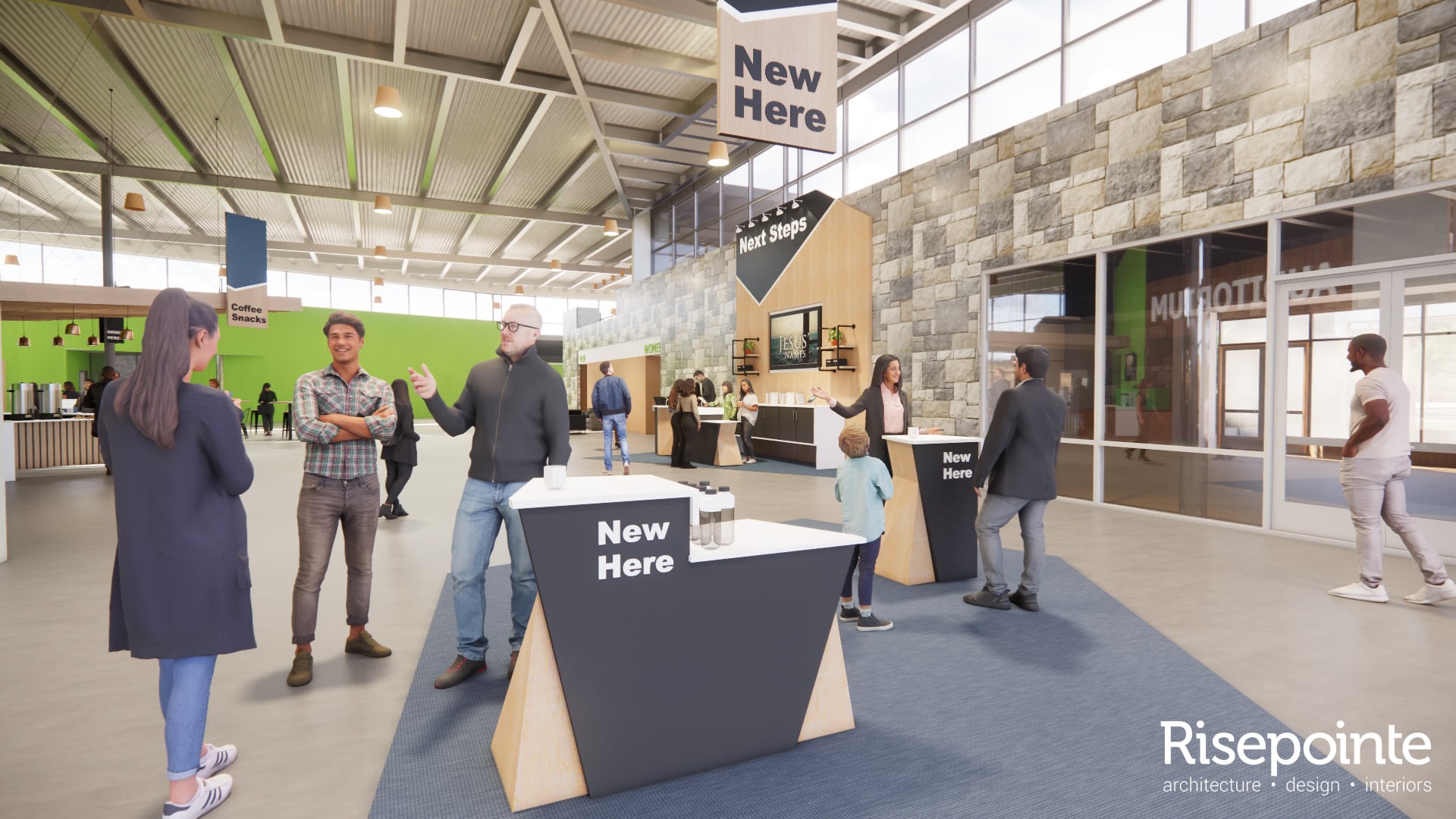
DNA over Design: Prioritize people and your core mission over “perfect” architectural plans.
The Space Between: One of their most powerful design elements isn’t a room at all—it’s the “Core DNA” of gathering between buildings.
Outdoor Spaces Matter: In hot climates, the combination of connection and shade creates a “sacred gathering” space.
By embracing adaptation and value engineering, they protected the “core” of their ministry while creating a space that feels like home.
2. The Backyard Blessing: Summit Community Church (Buckeye, AZ)
If you’ve ever been to Buckeye, Arizona, you know two things: it’s growing fast, and it’s hot. Summit Community Church needed a plan that could scale with a booming population while handling the unique challenges of the desert.
The Problem: Navigating the Phases
When you’re a growing church, you often can’t afford to build the “Final Vision” on day one. The challenge is: how do you build Phase 1 without making Phase 3 impossible?
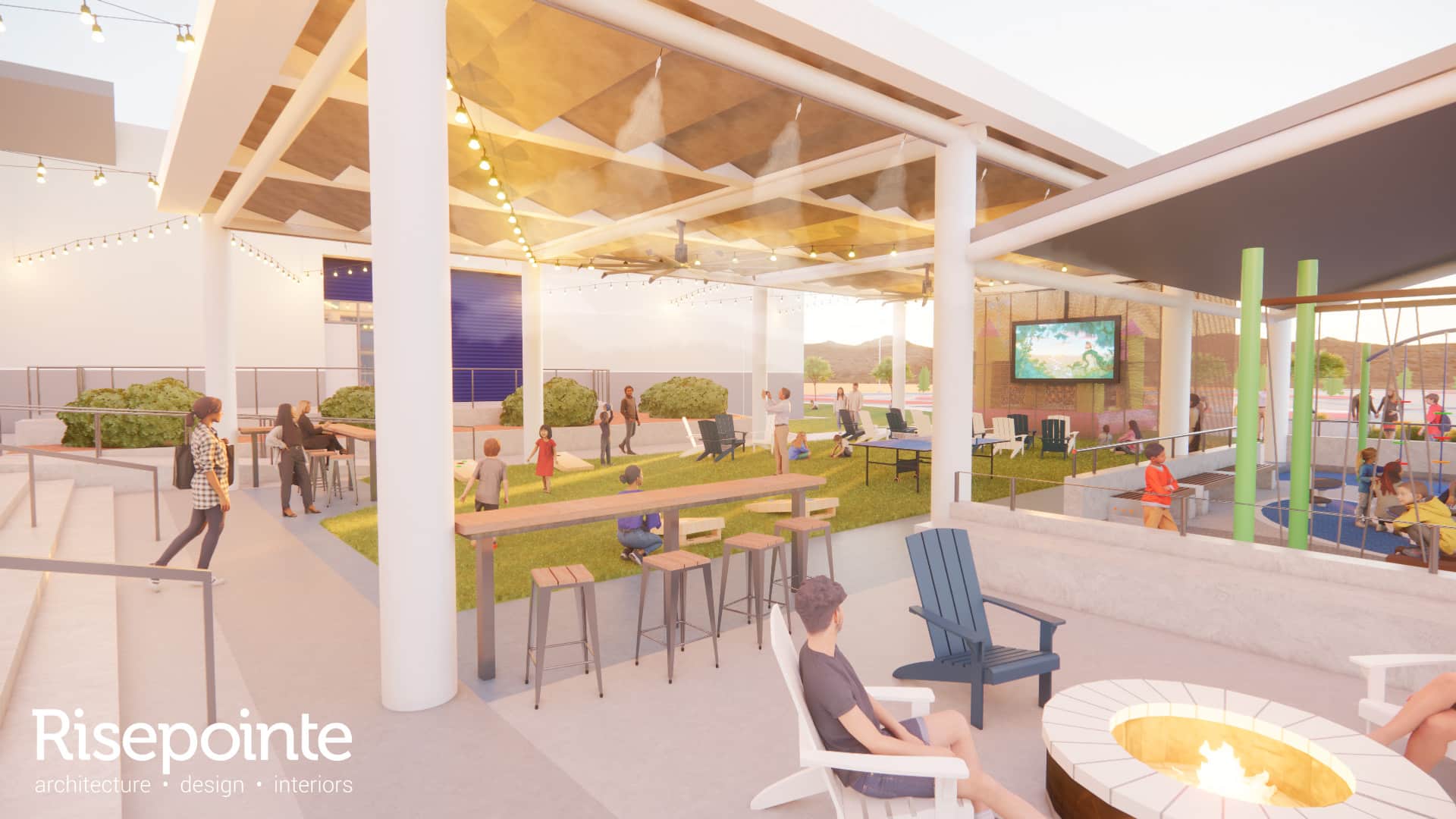
The Vision: A Community Hub
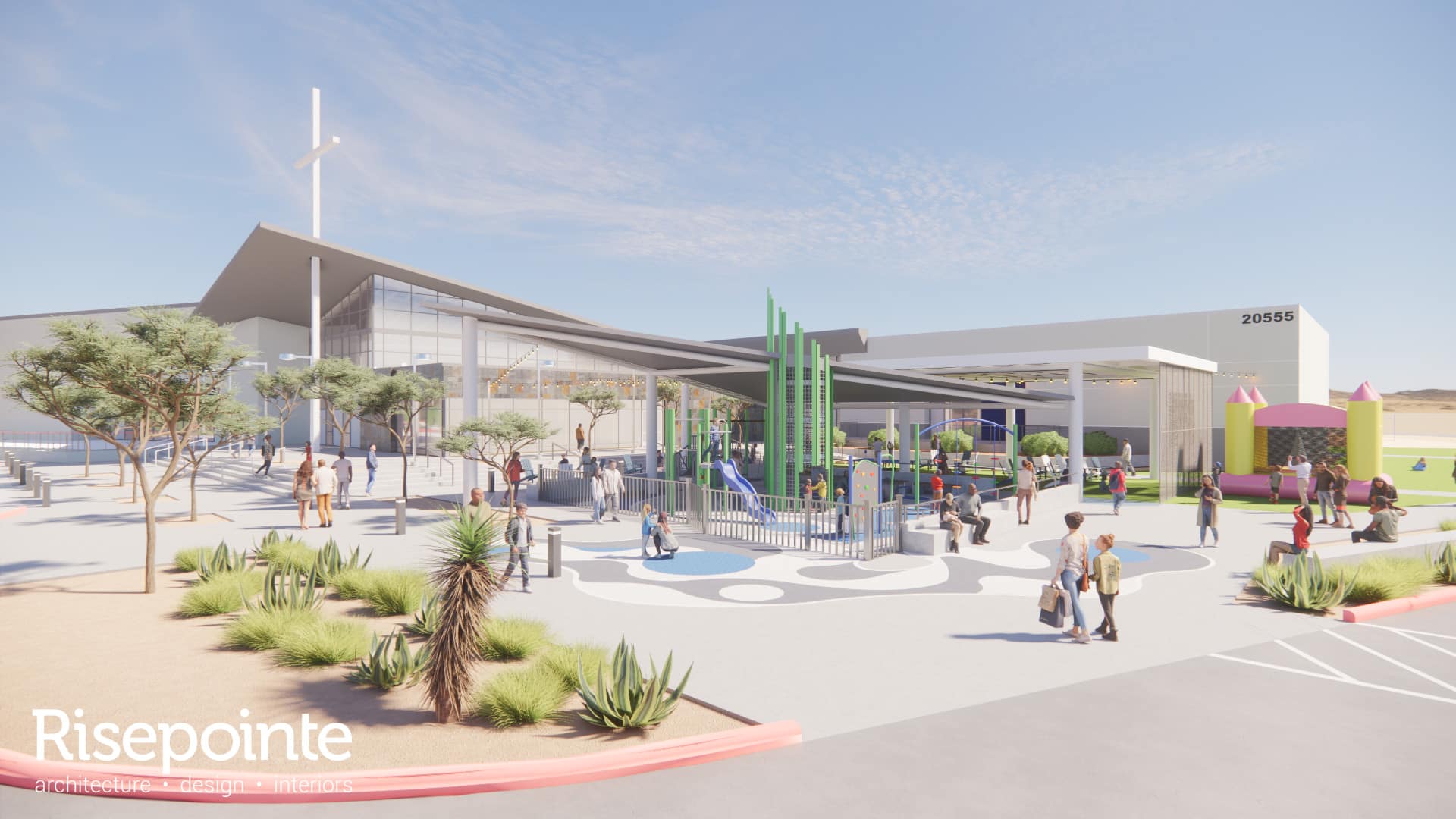
Summit’s schematic design review focused on a multi-phase expansion that turned the church into a seven-day-a-week community hub.
Massive Courtyard: A “third place” for families to gather outside the family entry.
Food Truck Zones: Designing painted crosswalks and specific zones turns their campus into a community festival.
Fire Pits & String Lights: Creates a super welcoming atmosphere even in hot climates.
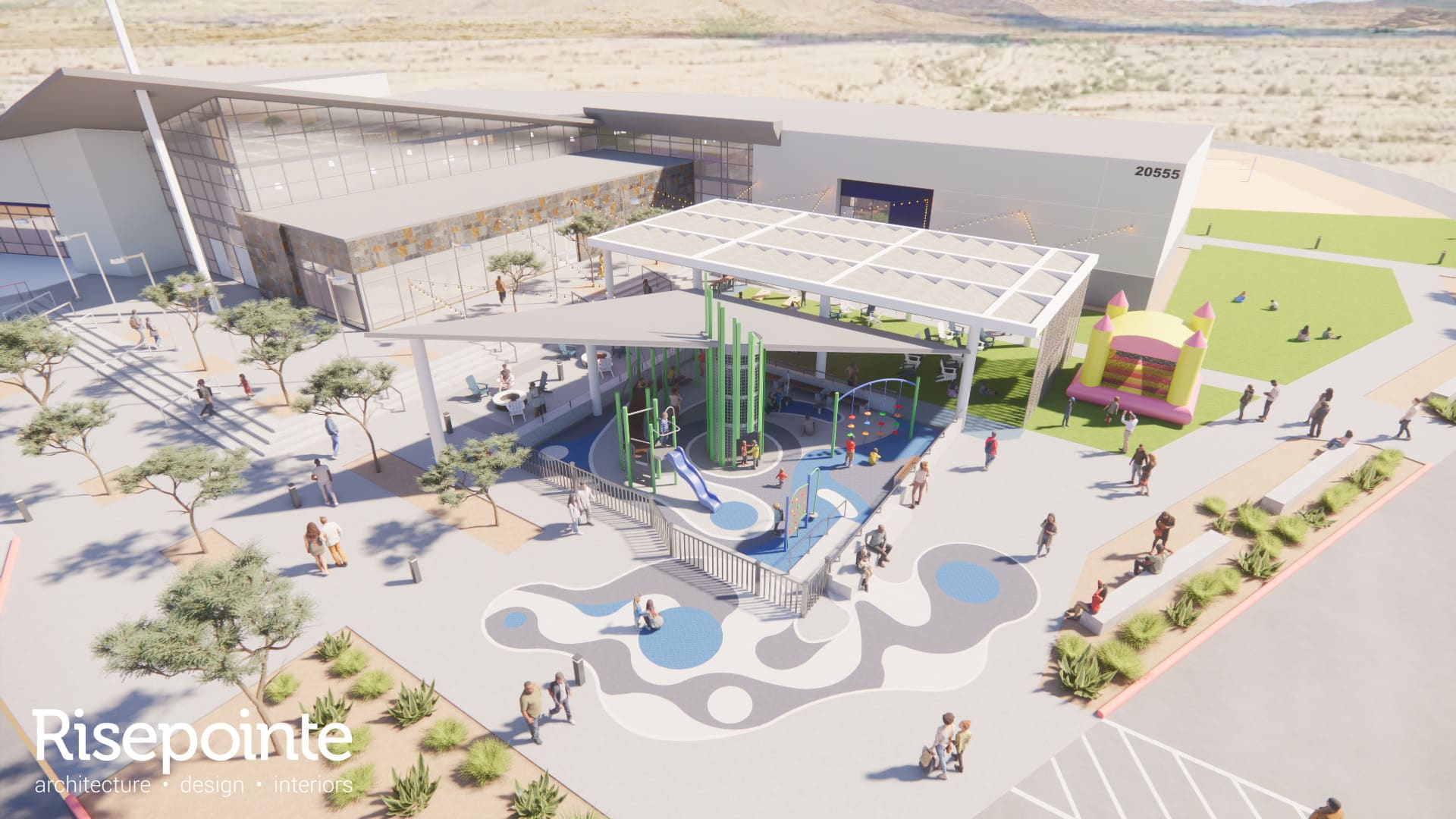
Integrated Playgrounds: Relocating and expanding the playground signals to every passing car that “kids are a priority here.”
By focusing on outdoor spaces and a “Backyard” feel with covered trellises and overhead fans, Summit is building more than a sanctuary; they’re building a destination where people feel they belong before they even hear a sermon.
3. High Stakes & Urban Impact: Downtown Cornerstone Church (Seattle, WA)
Some projects are defined by their constraints. Our work with Downtown Cornerstone Church (DCC) is an award-winning example of what happens when you refuse to let a “difficult” location stop a God-sized vision.
The Problem: Jurisdiction & Historic Red Tape
DCC’s home is a historically protected landmark building in Seattle that formerly housed labor unions. We weren’t just dealing with strict building codes; we were dealing with the Landmarks Board, seismic requirements, and green energy ratings. For many firms, the red tape of an urban remodel structure in a major city like Seattle is enough to cause total paralysis.
The Win: Navigating the Impossible
Because we understand the unique marriage of school and church needs, we were able to maximize a welcoming space spread across three stories.
Preserving History: We repaired original stairs and maintained the central entry geometry while completely reimagining the size and capacity of the building for gathering and worshiping.
Modern Engagement: We reconfigured the south end of the concrete building to provide a stair and elevator core to allow for code-required access to upper and lower floors, creating a modern and engaging facility with Flexibility for DCC from Weekends to throughout the week.
Design for “Transcendence”: The space was designed to be urban yet communal, word-centric yet creative, and spacious yet safe.
DCC envisions thousands of people from every corner of the city united under a new identity in Jesus—and their building now serves as the launchpad for that urban renewal.
The Difference is the Partner
Why do some projects stall in the planning phase while others become award-winning community hubs? It comes down to who is in the room with you.
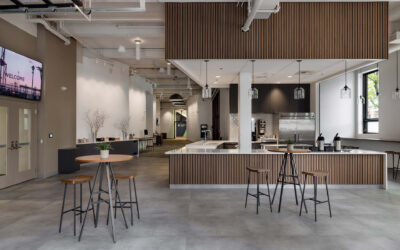
When you are facing decision paralysis, expensive costs, and difficult jurisdictions, you don’t just need an architect; you need a partner who speaks the language of “Kingdom Impact.” A general commercial architect might know how to build a box, but they don’t understand why a historically protected labor union building needs a “Connection Counter,” a specific “Kids Check-in” flow, or a “Nursing Moms’ room” that is prioritized as much as the platform.
Choosing a partner who understands the unique DNA of churches and schools makes the difference between a building that is just “finished” and a building that is “fruitful.” We use our REDS Analysis™ (Risepointe Evaluation & Design Study) to measure your building by the numbers, ensuring every dollar invested is leveraged for maximum impact.
Envision the Future
Close your eyes and imagine your community three years from now. Imagine a family that is currently “un-churched” walking onto your campus. What do they see? Do they see a “closed” building that looks like a fortress, or do they see a vibrant courtyard with string lights, a warm cafe, and a lobby that feels like a home?
We believe your church’s reach and impact are so much greater than what you see on a Sunday morning. If you are willing to lean in, find the right partners, and trust in the providence of our good Father, the “paralyzing” problems of today can become the “miracle stories” of tomorrow.