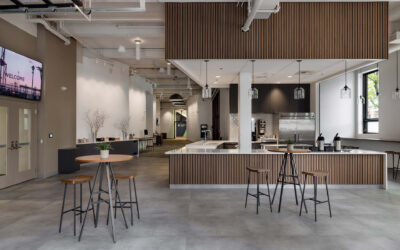

Just as organizations develop strategic plans to guide their growth, designing a school campus requires master planning, both as a process of discovery and a means of communication. The process of master planning involves the input of school leaders, user groups, the architect, a civil engineer, and sometimes the municipality. A more formal master plan will include preliminary engineering to address site concerns such as parking, ingress/egress, stormwater management, and open space.
A thoughtful master plan will exhibit the following principles.
1. Community Connection and Identity
Schools serve as both learning environments and community anchors. Master planning should create welcoming entrances, public-facing spaces for athletics and the arts, and outdoor gathering areas that support community use after hours. A strong sense of place fosters pride, belonging, and long-term stewardship.
2. Student-Centered Learning Environments
Campus organization should reflect how children learn at different developmental stages. Classrooms, labs, play areas, and support spaces should be appropriately scaled, easily accessible, and adaptable to a range of teaching methods. Proximity between classrooms, collaboration areas, and outdoor learning zones enables a varied pedagogy.
3. Flexibility and Future Growth
K–12 campuses must evolve with enrollment changes, curriculum shifts, and technology needs. Master plans should allow for phased expansion, adaptable buildings, and infrastructure that supports future upgrades. Flexible spaces reduce long-term costs and minimize disruption as programs grow or change.
4. Student Safety, Health, and Well-Being
Safety is foundational in K–12 campuses. Planning should prioritize clear site boundaries, controlled access points, safe drop-off and pick-up zones, visibility for supervision, and separation of vehicular and pedestrian traffic. Access to daylight, fresh air, shade, and green space supports both physical and mental well-being.
5. Clear Organization and Wayfinding
Students, parents, and teachers all benefit from campuses that are intuitive and legible. Zoning by grade level, clear circulation paths, visual landmarks, and simple layouts help students navigate independently and reduce confusion. Logical campus organization also improves supervision and emergency response.
CASE STUDY
When the leadership at King’s Way Christian Schools engaged Risepointe for the design of a new academic building, the team did not fully understand how to move hundreds of students around the campus as various phases of construction took place. The school was moving out of its original home in a church while simultaneously experiencing a record waiting list.
Through the master planning process, the design team explored multiple options for arranging the new spaces on the existing campus. Through this process, it became clear that breaking the main building into two additions provided flexibility in phase as well as sufficient space for the anticipated enrollment growth. Ultimately, the work was split into five separate construction efforts, with additional phases planned for future improvements.
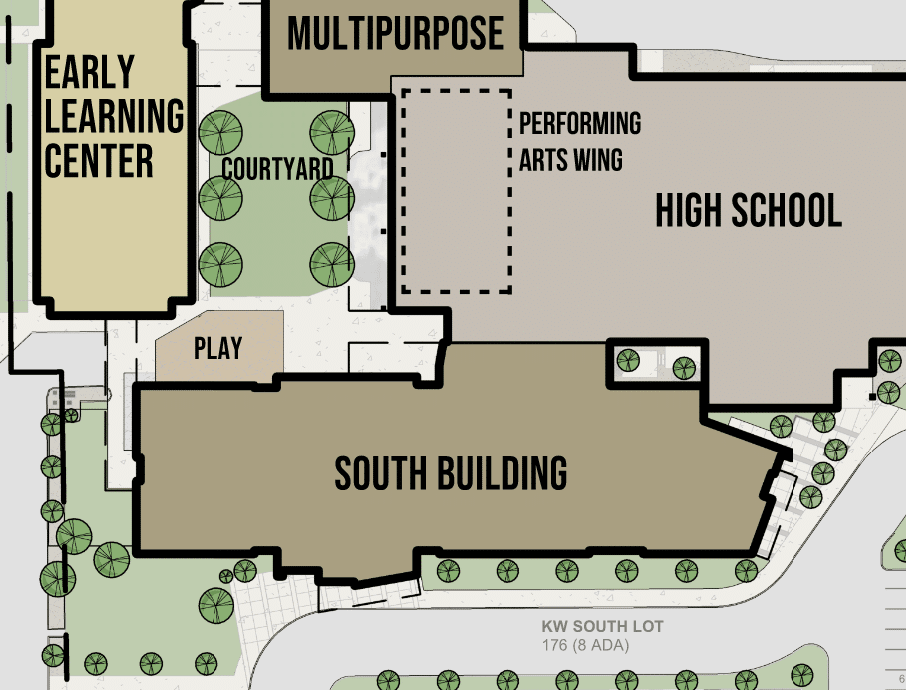
Portion of the King’s Way Christian Schools Master Site Plan
The initial project borne out of the KWCS master plan was the renovation of an existing middle school building for the use of their Early Learning Center. Most of the 20,000 square foot building was renovated and toilet rooms were added to some classrooms. The existing band room became a gross motor space and the previous workshop was turned into a commercial kitchen.
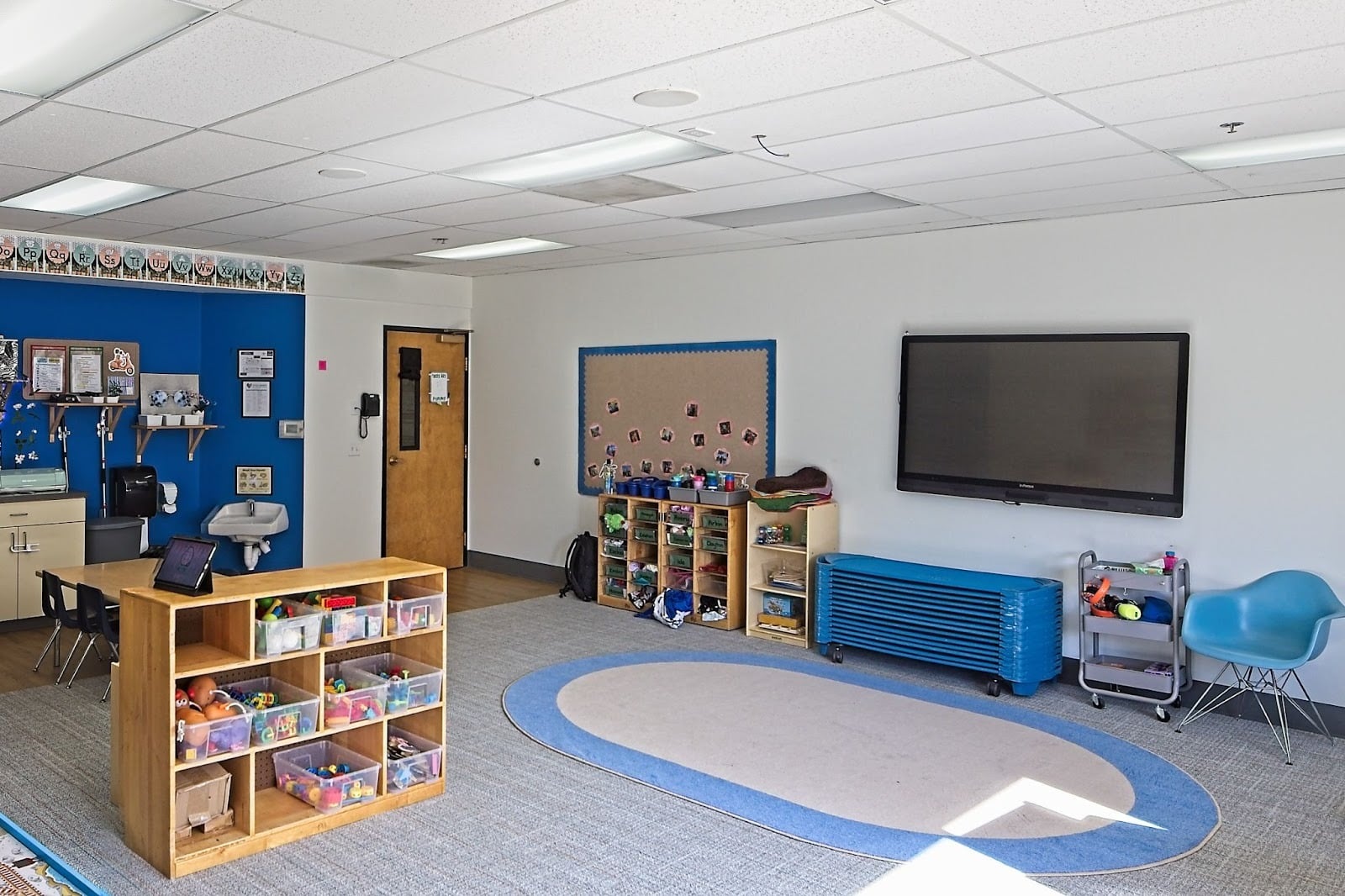
Renovated Early Learning Center Classroom
During construction, some students were relocated to portable classrooms in a new Academic Village. Fine arts spaces were renovated in the existing high school to accommodate the relocated middle school. The fourth phase of work, the 45,000 square foot academic building, is shown under construction below.
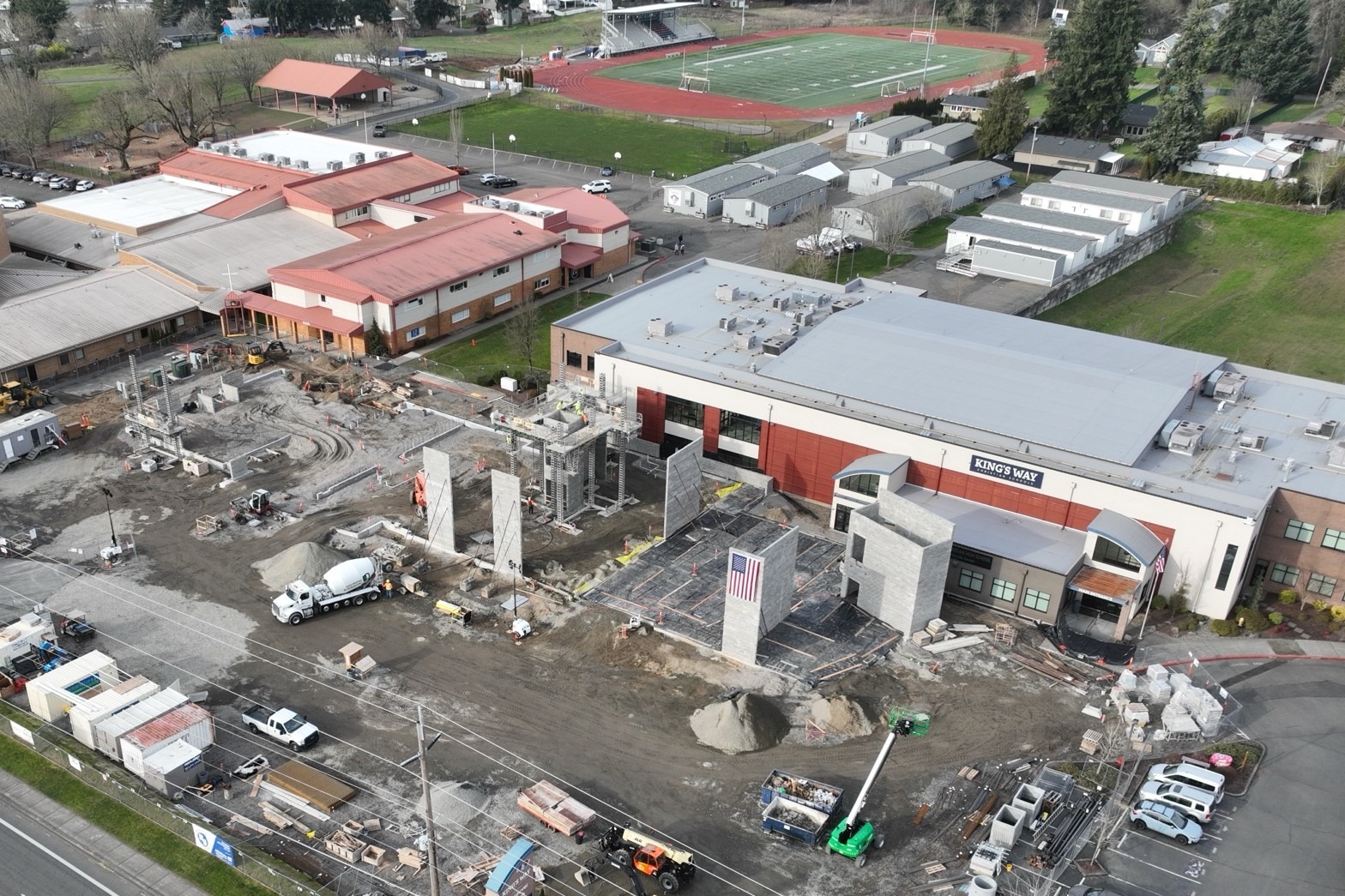
Academic Building Under Construction
Photograph Courtesy of Robertson & Olson
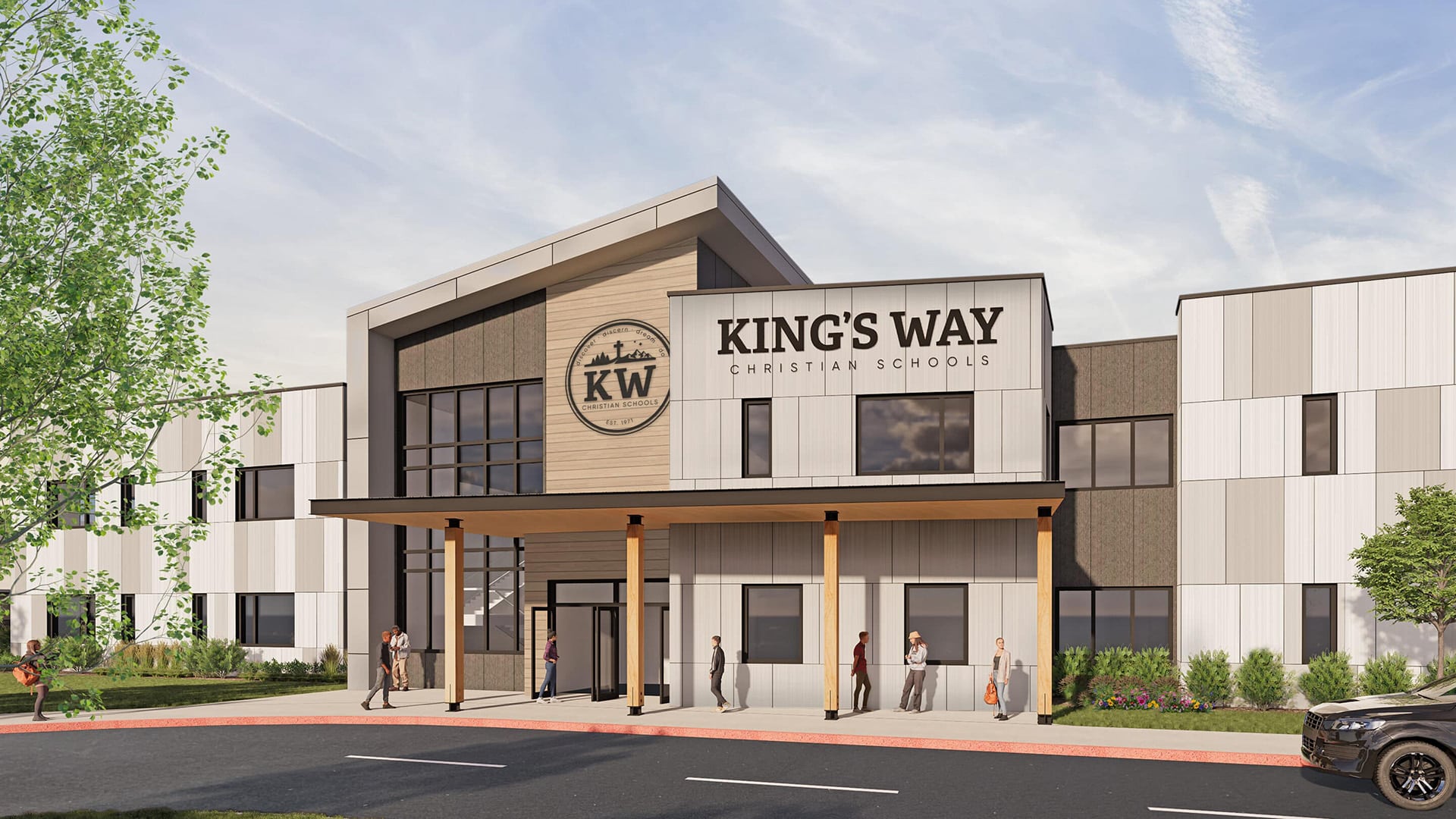
This K-8 academic building will serve as the new heart of the campus. The main entrance plaza and interior atrium create gathering spaces for a variety of uses, with adaptability as a core principle.
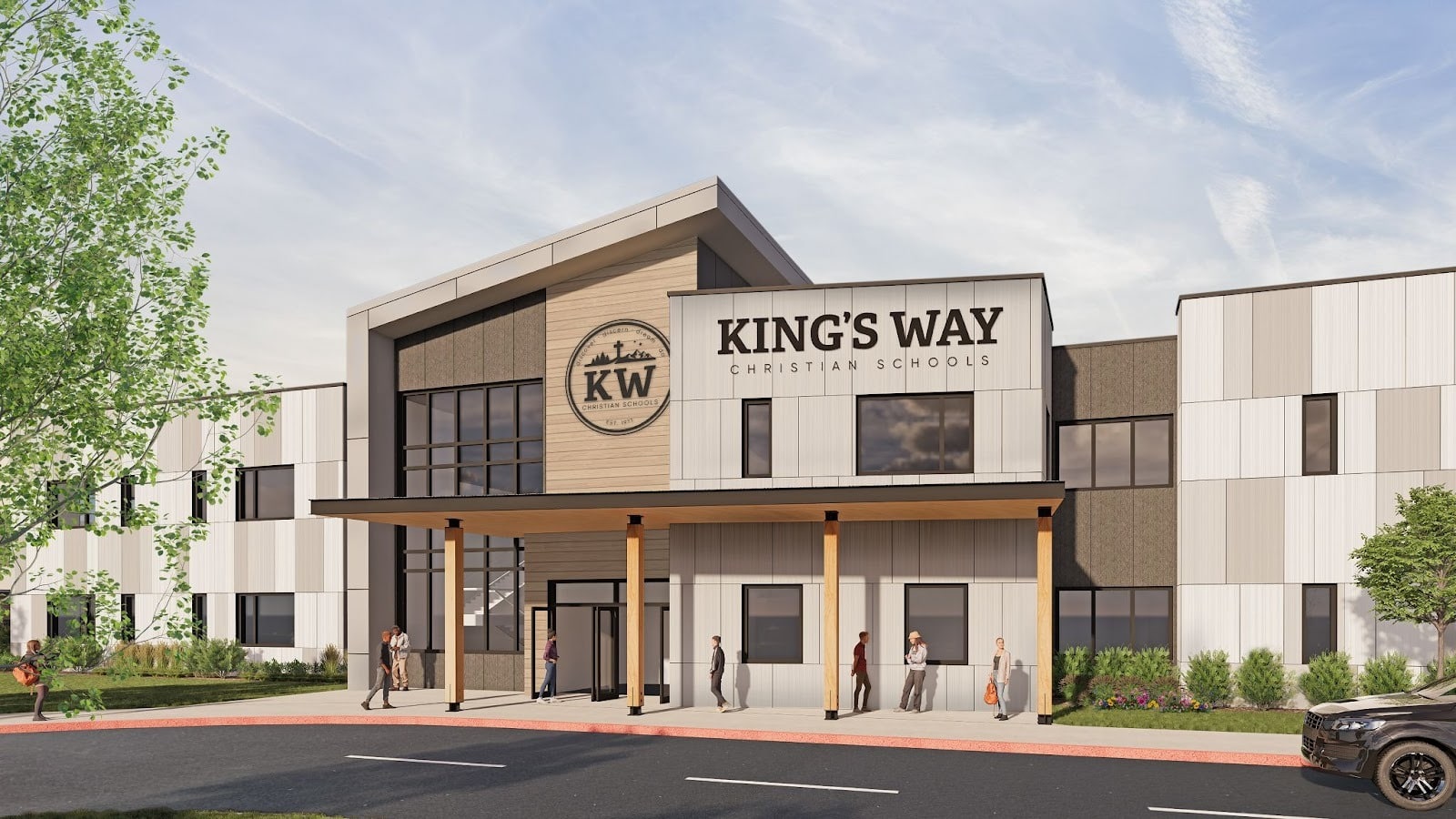
Rendering of New Academic Building, Completion 2027
A gymnasium addition is planned to the north of the existing high school, completing this set of facility improvements. While these five projects set up King’s Way for the next decade of education, the master plan is being updated with athletic facilities and other education spaces. For this growing school, parking is an ever present concern, and a future parking structure is planned north of the main building cluster.
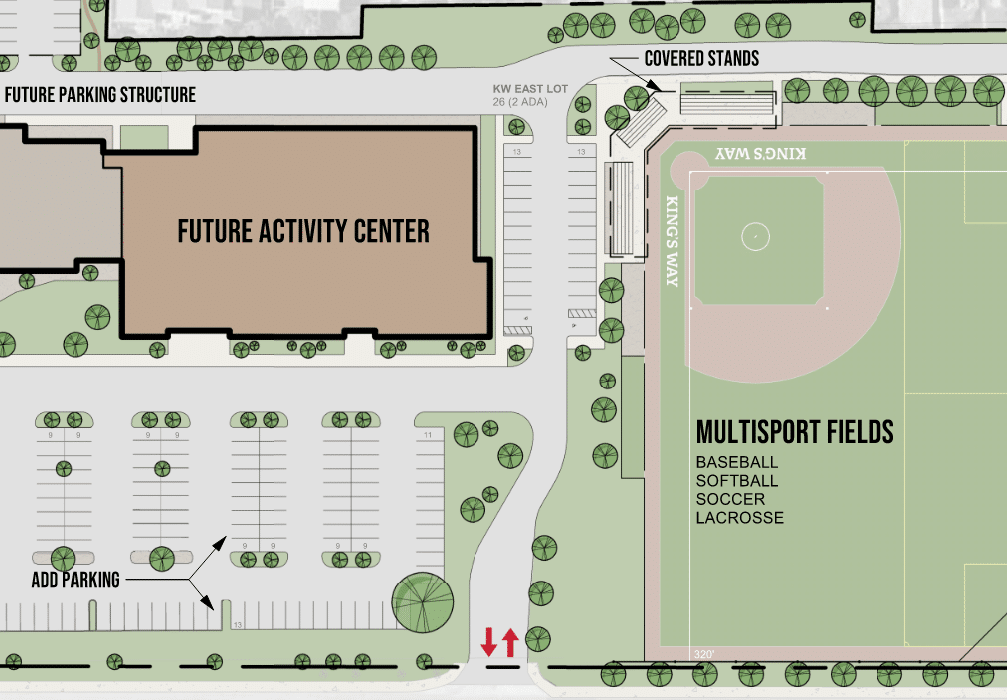
Portion of KWCS Master Plan Showing Future Improvements
Master planning is ultimately a tool for communication, both within a school’s leadership team and the broader community. Through good design and thoughtful collaboration, the vision of an organization can take shape via the master plan.