
At some point I will write a book on this topic, not just on the mistakes I see being made over and over again, but the ones I made myself. Rarely when a mistake is made is it the first time that ever happened and rarely is it a unique one-off with a random reason. Most of the time we can look back and say “yup, I kind of saw that one coming.”
Don’t feel bad. If you have made one of these mistakes join the club. I have a punch-card for you, and mine has all ten! (Does that mean I get a mistake-free project?)
Here is how it happens; Church construction projects are filled with excitement, possibility, and vision for the future. Senior Pastor is up there creating vision, new space renderings are showing all these opportunities for discipleship, outreach, hospitality, and community impact for generations to come. But alongside that excitement comes significant responsibility.
Every church project has to raise money. We have to show people ‘how’ we are solving the problem so that ultimately we reach more people. The campaign is never about the building, the project is 100% about the building. And once we raise and borrow money we have to head into design and construction with the right strategy to still deliver the vision AND the project! (And those these can be exclusive) Here is how you should do that and the top mistakes to avoid:
1. Phasing the Project
Yeah I am jumping in with the biggie right off the bat. One of the biggest mistakes churches and ministry organizations make is thinking that Phase 2 is coming. I’m not talking about doing construction in two phases, I am talking about building an auditorium for 1,000 adults but only having room for 100 kids and thinking that in 3 years we will just do another campaign and add onto our kids building.
I’ve worked with dozens of churches that spent decades in mis-aligned buildings that held them back from their ministry potential just because they thought phase 2 was coming and it didn’t. Lot’s of reasons that don’t matter, economy trouble, change in leadership, sin in the camp, all the things.
Design something on paper that when you look at it you can say “Yes, we can do a decade or more in that space.” If not, fix it or don’t spend millions of dollars.
2. Underestimating the Full Project Cost
Construction pricing is only one piece of the financial picture.
Many churches fail to account for soft costs like architecture, engineering, permits, insurance, and utilities. Others will overlook furniture, AVL systems, signage, landscaping, or move-in expenses. This isn’t intentional, you just don’t do this every day nor is it why you got into ministry as a career.
Hidden costs such as site preparation, grading, soil conditions, or utility upgrades can also significantly impact the final investment.
A healthy project budget includes:
- Hard construction costs
- Soft costs
- Furniture, fixtures, and equipment
- Operational considerations
- Contingency reserves for unforeseen conditions
Financial clarity early in the process helps churches move forward with confidence instead of reacting to surprises later. I hate surprises as much as I hate change orders.
3. Skipping a Long-Term Master Plan
It is tempting to solve immediate space needs as quickly as possible. But isolated decisions often create limitations for future growth. I’ve talked to a LOT of pastors that just want the problem to go away. The thought of spending time planning out the future feels like a waste of time, but more often than not, it saves time.
We have rushed more than a few projects through design at Risepointe, only to be ready to start construction and realize that the problem shifted, or we were just going to introduce another problem.
A comprehensive master plan helps churches think strategically about:
- Future ministry planning
- Campus flow and circulation
- Parking and accessibility
- Phased construction opportunities
- Long-term operational efficiency
Planning beyond the current season creates flexibility and gives you confidence that the next step is the right project to help your church grow.
4. Building Beyond Sustainable Financial Capacity
Faith and wisdom are not competing values. Sometimes churches feel pressure to build larger or faster than their financial reality can comfortably support. While vision is important, long-term ministry health matters too.
Overbuilding can create ongoing strain through debt, operational costs, staffing pressure, and deferred maintenance.
Healthy planning aligns vision with sustainable stewardship so the facility strengthens ministry instead of limiting it. There are some simple formulas to consider here when looking at debt/construction/staffing/operations so pay attention to those and the lessons other churches have learned the hard way.
5. Waiting Too Long to Bring in Trusted Experts
“We are adding a fourth service this fall and decided we should talk to someone about moving or expanding.”
Ouch. People will come to the 3rd and 4th services but not as many, and they certainly won’t invite their lost neighbor to come to church with them at 8am on a Sunday morning.
When you reach 80% capacity at your largest service you need to start the conversation. Conversation to include church planting, multi-site as well as architecture and construction. Bringing experienced ministry-focused partners into the conversation early allows churches to:
- Evaluate real needs versus perceived wants
- Align budgets with priorities
- Identify potential site challenges
- Explore phased solutions
- Develop realistic timelines
An experienced outside perspective also helps leadership teams make informed decisions rooted in data, experience, and ministry understanding rather than assumptions alone.
6. Ignoring Operational and Maintenance Costs
Please don’t do this. Budget every year for maintenance costs. You know how long you have on your roof and when your HVAC units will expire. Put money away every month. Also, technology is changing super fast so budget for that replacement as well.
If you don’t, you will run out of seats and call Risepointe to add on and we won’t be able to because the deferred maintenance ate up too much of the budget to make the project viable.
We also see way too many churches try to save $20k on the building project but then it costs them 10x that every five years in maintenance. We see this a lot on roofs, building envelope systems, mechanical systems that were simplified to save money but now have to run all the time to keep one office warm.
Wise stewardship considers not only what it costs to build, but also what it costs to operate faithfully for years to come so this should be a critical piece of the design.
7. Neglecting Hospitality and Guest Experience
Have you thought about how Church buildings communicate a message long before a sermon begins? Parking, signage, entrances, children’s check-in, gathering spaces, accessibility, and traffic flow typically shape how first-time guests experience the ministry environment. This needs to be your number one filter on EVERY project; how does this make our guests feel?
Hospitality is more than aesthetics. It creates environments where people feel welcomed, comfortable, and connected from the moment they arrive. Thoughtful planning in these areas can significantly improve both functionality and first impressions. If every time I invite my neighbor to church I have to make an excuse for the building you have an issue.
8. Failing to Prepare for Construction and Market Changes
Construction projects rarely unfold exactly as expected. We have to be ready or it will de-rail the project or greatly change the material outcome.
Material costs fluctuate. Labor shortages happen. Permit approvals take longer than anticipated. Site conditions reveal unforeseen challenges. Churches that fail to prepare for these realities often face unnecessary stress during construction.
Including contingency reserves—typically 10–20% of the project budget—creates flexibility and protection when unexpected changes arise. Planning for uncertainty is not a lack of faith. It is an essential part of responsible stewardship.
Most of the time when this happens we have to cut off a portion of the project or push it to “Phase 2” (See Mistake #1)
9. Making Decisions in a Vacuum
It’s tempting to want to make decisions quickly and with our goal as a leader in mind, especially when that goal is the great commission. However, every decision on a construction project has multiple down-stream effects that need to be measured and accounted for.
First start with vision and leadership alignment. Make sure the team is aligned to what the goal of the project is. This will help when decision are made that effect multiple leaders.
Over communicate. Make sure the internal and external team knows what needs to happen. This includes the budget, the timeline etc. Tell your construction team how much money you have to get the project completed for. Believe me, they aren’t just going to inflate their numbers to make a big profit, you will out “vision” them every time. The sooner they deal with the reality of your budget and goal the sooner they can help you make decisions.
10. Treating the Building as the Mission
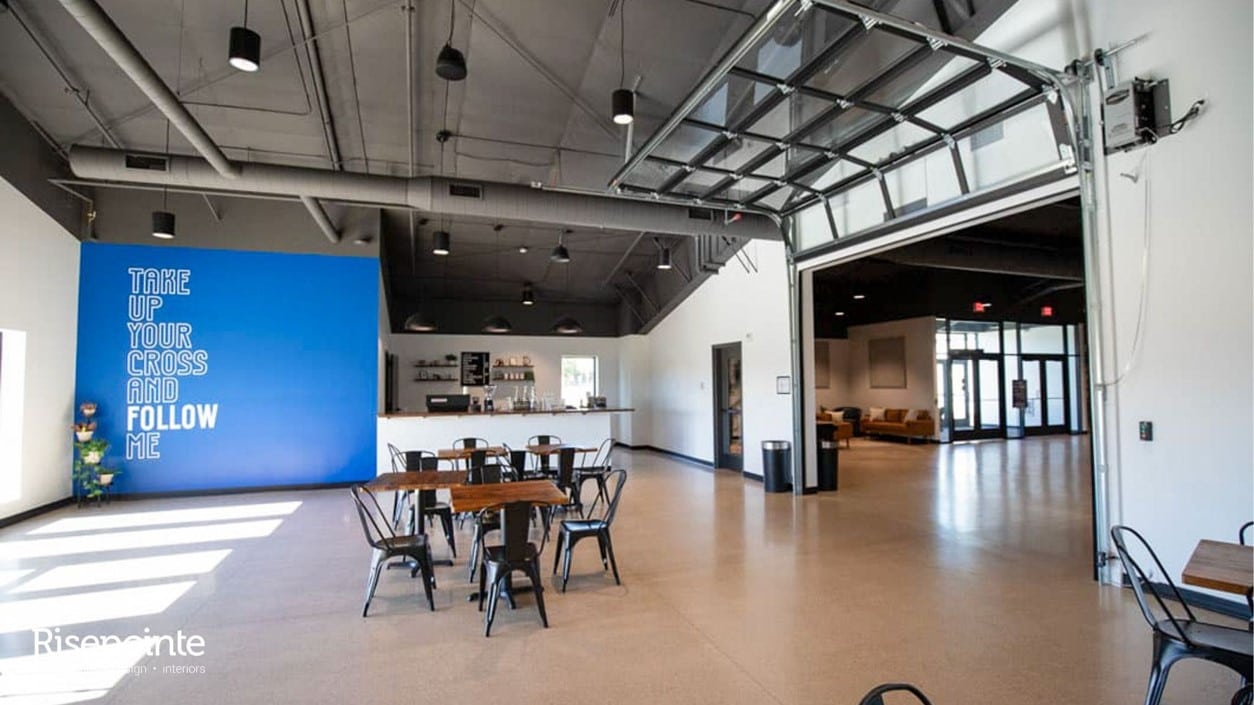
I will state the obvious; The goal is never simply to complete a building project. The goal is to create spaces that support discipleship, outreach, worship, education, and community impact. There that is done.
The real way we subconsciously treat the building as the mission is when we get to grand opening and say “Oof, I’m glad that is done.” Our building, our space, our environment is never “done” it is only on a certain version. I think McDonalds has renovated every restaurant 5x since the last Burger King remodel. Guess which environment I take my 7th grade Junior High boys small group to after we play laser tag?
Constantly improve, move signage, change where the guest services spot is, experiment with kids check-in kiosk designs and move them around, update the carpet, use some accent paint, buy some awesome lobby furniture, you get it.
At Risepointe, we believe church facilities should serve the mission—not limit it. Our team of former pastors, administrators, and ministry leaders understands the unique challenges churches face when navigating growth, finances, and future planning. By combining ministry experience with strategic design expertise, we help churches move forward with confidence, clarity, and long-term stewardship in mind.